Guide to Hair Systems
A bespoke hair system — once known as a wig, hair piece or toupee — is a non-surgical way to restore a full, natural head of hair. This guide walks you through the base types, hair options, attachment methods, care and cost, so you can choose the right system with confidence.
What is a hair system?
A hair system is a custom-made base, fitted to the exact shape of your scalp, with real or synthetic hair attached. It sits over the areas where your hair has thinned or receded and blends seamlessly with any hair you still have, giving you a full head of hair without surgery, downtime or medication.
Hair system base types
The base is the foundation everything else is built on, and it's the single biggest factor in how your system looks, feels and lasts.
Lace
Lace bases (French or Swiss lace) are light and breathable, with knots that mimic hair growing from the scalp for an undetectable hairline. They are the most natural-looking option, but they are more delicate and need a little more care.
Skin / poly (thin skin)
Thin-skin (polyurethane) bases give an incredibly realistic scalp appearance and are easy to clean and attach. Thinner skins look the most natural; thicker skins are more durable and last longer.
Monofilament
Monofilament bases use a fine, durable mesh that lets hair be hand-tied for natural movement and multi-directional styling. They are a strong middle ground between realism and longevity.
Hybrid bases
Hybrids combine materials — for example a lace front for an invisible hairline with a more durable skin or mono back — to give you realism where it matters most and durability for everyday wear.
Human hair or synthetic?
Most bespoke systems use real human hair, which can be cut, coloured and styled exactly like your own and reacts naturally to light. Synthetic hair is cheaper and holds its style well, but looks less natural and is less tolerant of heat. We match the hair type, density, colour, wave and direction to your existing hair for a seamless blend.
How hair systems attach
There are a few ways to secure a system. The right one depends on your lifestyle, your skin and how often you want to remove it.
Tape
Double-sided tape is clean, quick and beginner-friendly, typically holding for several days up to a couple of weeks before a refresh.
Liquid adhesive
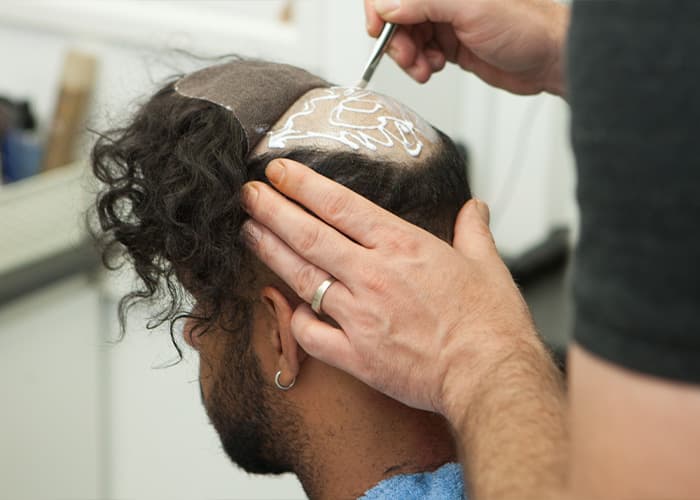
Liquid adhesive (glue) gives the strongest, longest hold and is ideal for an active lifestyle, swimming and exercise, usually lasting two to four weeks per fitting.
Clips and integration
If you have enough surrounding hair, clip-in or integration systems let you remove and reattach the system easily without adhesive.
Caring for your hair system
With the right routine your system stays looking its best: gentle cleansing, conditioning and regular maintenance appointments to re-secure and refresh it. We'll show you exactly how to wash, style and maintain yours, and recommend the right adhesives, tapes and care products.
How long does a hair system last?
Lifespan depends mostly on the base. As a rough guide, fine lace and ultra-thin skins last around one to three months, while thicker skin, monofilament and hybrid bases can last four to six months or more with good care. Many wearers keep a spare system in rotation so they are never without one.
What affects the cost?
Price is driven by the base type, the amount and grade of hair, the level of customisation, and how often you refit and replace. We give you a clear, bespoke quote at your consultation with no obligation — see our prices page for a guide.
Getting started in Bristol
The best first step is a free, no-pressure consultation. Phil 'The Hair Man' Osmond will assess your hair loss, talk through the options above and recommend the right system for you. Book your free consultation to get started.